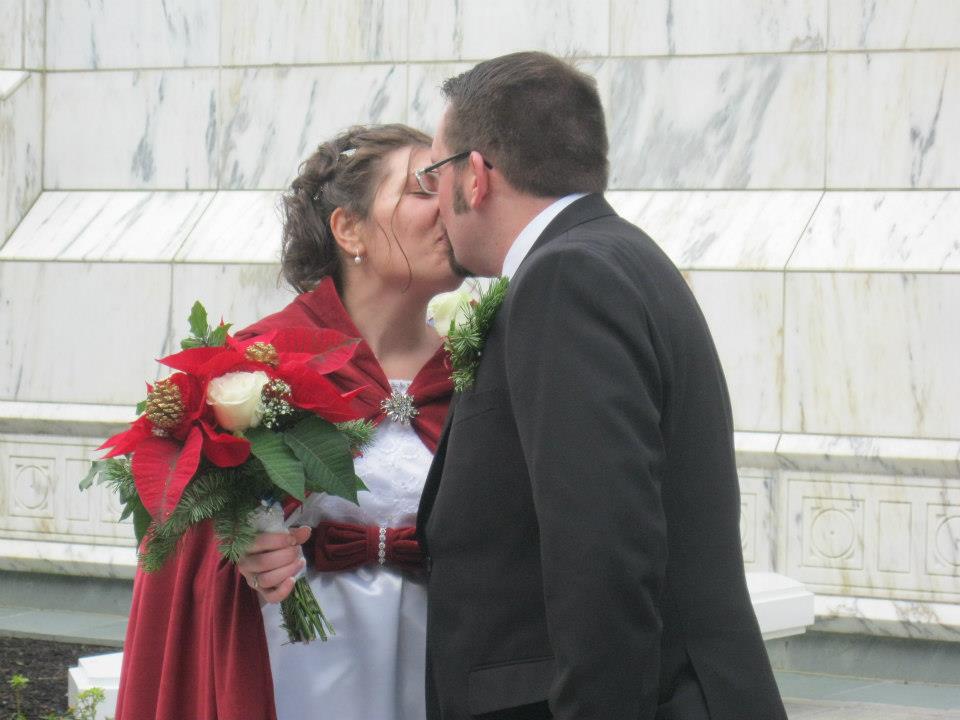
Extended Families and Marriage: Where Do We Draw the Line?

“Strong marriages are built by what couples choose to do once they are married and by what parents and siblings on both sides do to help support them”.
James M. Harper & Suzanne Frost Olsen
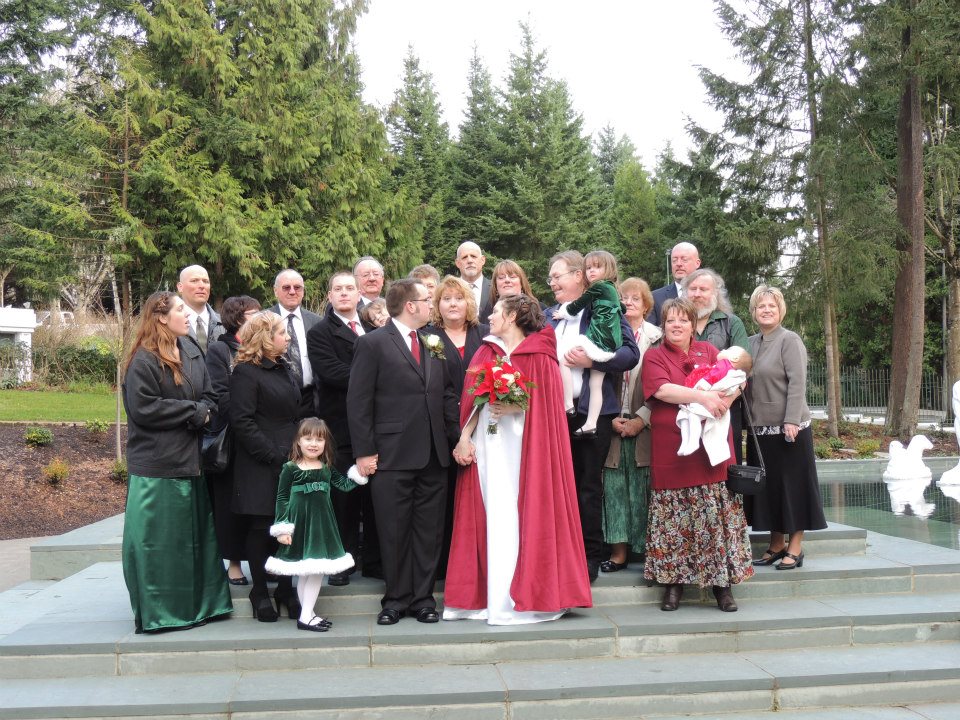
A few of our extended family on our wedding day.

          When a couple gets married, they are also becoming part of a larger picture than just the two of them. Every person comes from a family that had their own sets of rules and rituals and when two people bind their lives, they are both bringing these rules and standards into their marriage. In a book titled Till Debt Do Us Part, author Bernard Poduska shares that couples bring with them “family rules” and that they are “maintained and transmitted across generations on three levels: explicit, implicit, intuitive” (2000, p. 26). Explicit rules are verbally communicated rules that a family lives by such as don’ talk with your mouth full. Put your dishes in the sink when finished eating. Tidy up your bed in your morning. Implicit rules are unspoken, repeated rules that happened during childhood (Poduska, 2000, p. 27). For example, knowing which chair belongs to dad. Not being out later than curfew. Understanding when mom reacts a certain way, it means to not bother her about the issues further. Intuitive rules are also unspoken and deal with “the emotional legacy inherited by each person, any need to ‘pay back’ something owed, or to ‘pass on’ something of value” (Poduska, 2000, p. 28). When a couple gets married and doesn’t have an understanding of the family rules that each brought to the table, things can become super rocky in their relationship.

          I talk about these different rules because these are what shape us into the people we become and how we work through tough things together. At the same time, when a couple gets married they have this opportunity to create new rules that will become a part of their own individual family identity. Having to work with someone new after living a certain way before marriage can prove to be difficult, and a spouse could find themselves leaning upon their parents more than their spouse. This was the case or me.

          My mother and I have a very strong relationship and have turned to each other countless times for comfort and help. When I got married I didn’t see it a problem to turn to my mother and discuss things with her that would frustrate me about my husband or the children. I wanted to talk to someone that understood me and how my perspective was. What I didn’t understand was that it was hindering my relationship with my husband because the things I would complain about built an image to my mom of the person my husband and children were. It was hard to turn to my husband more when I was frustrated and tell him about the things that bothered me instead of always going to my mom. I know that is has been hard on my mother as well, setting these boundaries because, for any mother, they just want what is best for their children and want to be there for them through anything. But it is important that spouses build their relationship with each other and without the influence of the in-laws.

          Authors James M. Harper and Suzanne Frost Olsen (2005)  in their book titled Helping and Healing Our Families, spoke about the importance of building strong ties with parents-in-law as well as other family members. They shared three crucial points in regard to the relationships in families. They are “first, married children should confide in and counsel with their spouses. Second, if possible, they should establish their own household, separate from their parents. Finally, any counsel from outside sources should be considered prayerfully by both spouses together” (Harper and Olsen, 2005, p. 328). This is to say that when children grow and leave the family nest to marry a spouse, they don’t necessarily leave what they learned behind, nor the family they grew with, they are taking that and building their own individual life with those they have made covenants with. Sometimes this notion is more difficult on the parents than it is on the children. Parents desire happiness for their kids and having to let someone else with different perspectives and family rules influence their children can be scary. However, Harper and Olsen (2005) state that “parents who can work toward inclusion of a new son- or daughter-in-law and who show increased love and support have the best relationships with their married children and more influence in the lives of their grandchildren” (p. 330).

          I have been blessed with parents who, although it was hard to let me go, has welcomed my husband into the family, even from the first time they met him. I am blessed that my husband’s side has also welcomed me with open arms and have shown compassion in our union. There have been times when my husband and I have both had to understand the family rules and to learn to respect the ones that we knew were of great importance. At the same time, we have had to stand together in defense of the family rules the both of us have created for our own family, and thankfully, extended members have been opened and understanding. Our marriage has been strengthened because we have each other to rely on, but it helps to know that we have married into families that are supportive and caring. Having extended family members that are supportive and loving can truly help in strengthening a couple’s relationship. Having support from the extended family is great, but it also takes an effort on the children-in-law too. Get to know your extended family and have an open perspective of the family rules your spouse may have grown up with. Doing this will not only give you knowledge of your spouse, but it will help you see your in-laws in a different light as well. I know from my own experience in getting to know my husband’s extended family, I have gained more insight to who they are and I then am able to broaden my charity and compassion on them if things become an issue.

David’s extended family and us on our wedding day.

References

Harper, J. M. (2005). Creating healthy ties with in-laws and extended families. In Helping and healing our families (pp. 327-334). Deseret Book Company.

Poduska, B. E. (2000). What we bring with us. In B. E. Poduska, Till debt do us part (pp. 25-50). Salt Lake City: Shadow Mountain.

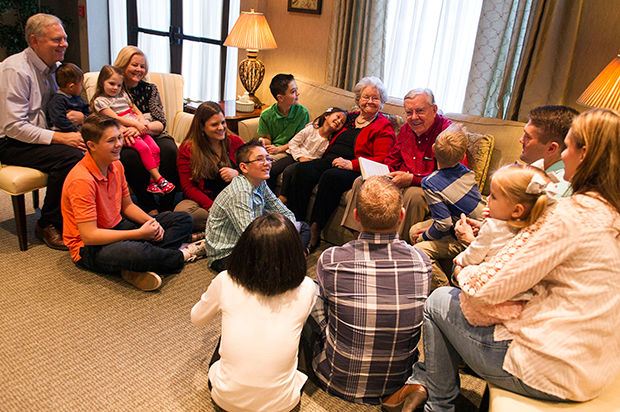
Family Councils… Let’s Talk About That!

“A unity which comes to a family…softened by the Spirit will bring great power”
Elder Henry B. Eyring

            Remember a time when you were part of a group, assigned to work together to accomplish a task, or a time you may have noticed a council going on where a decision needed to be made. Now, think about how it all went down. Was there a leader? Was there one or a few that didn’t pull their own weight? Was there contention among those in these groups and their discussion on how they were going to find a solution? Think of the outcome of the assignment or the outcome of the council. Were the group unanimous in their conclusions? Was there unity and understanding of different perspectives? You might be wondering what all of this has to do with my post this week. Well, I’ll tell you. We can tie this idea of working in groups to that of the family structure.

            I am sure at one point in time all families have found themselves stuck in figuring out how to solve an issue, no matter how small or big. The parents might push their authority on the children to get them to comply, and then the children might become angry and obstinate to their parent’s orders. In the end, nothing ever really gets solved because the contention is too high, and no one is willing to listen to another. There is no unity. However, when the spirit is present, a family can work together as a unified whole. In his talk, “That We May Be One”, Elder Henry B. Eyring states,

“The Spirit of God never generates contention. It never generates the feelings of distinctions between people which lead to strife. It leads to personal peace and a feeling of union with others. It unifies souls. A unified family, a unified Church, and a world at peace depend on unified souls” (1998).

            To be unified, one must let go of pride and be willing to hear and understand the perspective of others. Parents are to be leaders of the home, but they are not to be “harsh, domineering, or dictatorial” as stated by Richard B. Miller in his article “Who Is the Boss? Power Relationships in Families” (2008). As such, children are to understand and respect that leadership by following what the parents have set forth. A unified family is where a husband and wife council together about issues and then, if appropriate, discuss possible solutions to these issues with their children. Counseling together as a family helps everyone feel like they have a part in the group. Children like to feel as though they are included in big decisions and that their opinions matter. In his 2016 General Conference address, “Family Councils”, Elder M. Russell Ballard shared, “parents need to involve all family members in dealing with challenges and adversity. When council members feel they are part of a decision, they become supporters and specific positive results can be accomplished”.

           Counseling together as a family brings a deeper unity as all are working together for the greater whole. I know in our own little family, having young children it is difficult to counsel effectively. However, my husband and I have found that as we both are searching for opportunities to have discussions with our children about various topics, the Lord guides us and lets us know what our little children need to know at that point in time for themselves. Holding family councils now while our children are young, we know that it is preparing them to understand how our councils will work as they get older, and it creates a feeling of unity for them that they will want to continue counseling with their parents. Holding family councils, we are promised protection from the evil ways of the world. Elder Ballard shares,

“A family council that is patterned after the councils in heaven, filled with Christlike love, and guided by the Lord’s Spirit will help us to protect our family from distractions that can steal our precious tie together and protect us from the evils of the world” (2016).

            I know that as we have been prayerful parents, seeking for unity and harmony in our home, Heavenly Father has taught us the importance of counseling together and truly listening to what our children have to say. As they have contributed to the discussion, bringing their own thoughts and minds, they too are learning what it is to be a unique individual with different opinions yet can still work well with others. A unified family brings many blessings and a family that counsels together, stays together.

REFERENCES:

Ballard, M. R. (2016). Family councils.

Eyring, H. B. (1998). That we may be one.

Miller, R. B. (2008). Who is the boss? Power relationships in families.

Building Truth About Physical Intimacy

“Therefore, shall a man leave his father and his mother, and shall cleave
unto his wife; and they shall be one flesh. And they were both naked,
the man and his wife, and were not ashamed”

Moses 3:24-25

            My post this week touches on a rather personal matter, but one that I feel is time to share. It might be a topic that is sensitive to others, and that is okay. However, the purpose behind why I share this is to hopefully shed some light and understanding to others who may have struggled or still are struggling with the same issue. I speak about intimacy in marriage, a topic that is never something to be ashamed about, or too taboo to talk about. For most newlywed couples, it is natural to have some trepidation in the first weeks of marriage, especially regarding the bedroom life. But usually, after some time, the couple gets better and more comfortable with their sexuality and things are fine. That is not the case with me. My husband and I have been married for over six years and I am just now beginning to fully understand the beauty that comes from true intimacy.

            Earlier in my life, the knowledge of sex came too soon for my little mind to comprehend. It also came in a way that ultimately built lies and misconceptions of what true intimacy was and how special and sacred sexuality in a marriage can be. As I grew into my teenage years, I longed to date and be noticed by the boys, but at the same time, feared their existence. My mind couldn’t wrap around the notion that not all people violate or hurt others. How was I going to ever trust that part of my life with anyone? I wasn’t even comfortable with myself for I had felt ashamed of my body and I thought that intimate parts of my body were dirty. I had seen multiple counselors throughout my life, but it wasn’t until my early 20’s that the thought of being intimate with a man became a possibility. The counselor at that time helped me gain confidence with myself and over the years, I was comfortable being around guys and going on dates. This new-found part of my life was just hitting the tip of the sexuality iceberg. I thought that because I could be comfortable dating and experiencing my first kiss that I was healed! I could not have been more wrong.

 After I married my husband, that was when the real problems came, and I just didn’t understand why. I had studied up on sexuality in marriage and what it means in the culture of the church. I had read talks and quotes of Prophets who spoke about the sacred union between a husband and wife and how it was ordained of God. So then, why was it difficult to be with my husband? I didn’t realize at the beginning of my marriage, that the reasons being intimate was a struggle had anything to do with my past and the misconceptions my mind had built. These lies were deeply embedded, to the point that anything positive my husband tried to tell me, I just couldn’t believe him. In the September 1986 Ensign, Brent A. Barlow wrote an article titled Thy Twain Shall Be One: Thoughts on Intimacy in Marriage. He shares that “in spite of the potentially joyful aspects of sexuality in marriage, for many, it is a source of frustration and even contention. Part of the difficulty stems from mistaken ideas” (1986). It was after having our second child, things got incredibly worse. I knew it was time to get some help.

Over the last year and a half, my husband and I have both grown from the guidance and direction our counselor has given. With me, especially, she has helped my true self see and understand the beauty of the intimate relationship I can have with my husband. I also had to be open to learning about sexuality and what that can be for me personally within my marriage. I couldn’t stay ignorant of something that I really didn’t have a lot of knowledge about, nor even felt completely comfortable talking about. But I knew that the only way to gain an understanding was to study it out and discuss it with those that I trusted could teach me the truth. In his article Fulfilling the Sexual Stewardship in Marriage, Sean E. Brotherson quoted President Hugh B. Brown stating,

“The sex instinct is not something which we need to fear or be ashamed of. It is God-given and has a high and holy purpose…. We want our young people to know that sex is not an unmentionable human misfortune, and certainly, it should not be regarded as a sordid but necessary part of marriage. There is no excuse for approaching this most intimate relationship in life without true knowledge of its meaning and its high purpose” (2003).

I have learned that intimacy in a marriage is not just for creating babies, but that it can be a beautiful aspect that brings a couple closer together. Barlow (1986) shares, “while creating children is an integral and beautiful aspect of marital intimacy, to use it only for that purpose is to deny its great potential as an expression of love, commitment, and unity”. In the process of changing the lies my mind built, I have become more comfortable in sharing sexual concerns with my husband. When we were first married, I felt dumb to have questions and concerns because it was supposed to just happen for me, right? That was one of those lies. Talking about intimate things with a spouse is a vital part of marriage. Brother Barlow also states that “talking about this intimate relationship—including the emotional feelings that attend it—can go a long way in strengthening a marriage” (1986).

As I have healed, first and foremost, from the past that held me bound, and as I have changed those misconceptions of intimacy into bright, sacred truths that they are, my relationship with my Heavenly Father, myself, and with my husband has grown immensely and I am truly blessed. God has blessed me with a husband who is kind, and very patient. I worried all the time that I was hurting my husband because I couldn’t give him “what all men want”. He tells me all the time that his sexual gratification is not as important as my emotional wellbeing and needs. I am here to say that sex is not bad. It can be the grandest thing when done with the right purpose and intent. I am thankful that although sexuality and intimacy have been a thorn in my side, it has taught me to lean upon the Lord and to seek truth through Him. I know that a lot of people struggle in this area, and I here to say that you are not alone. I encourage you to seek help and knowledge so you too can come to learn of the beauty and sacredness that true intimacy is, especially the way God intended for it to be.

References

Barlow, B. A. (1986). Thy twain shall be one: Thoughts on intimacy in marriage. Ensign.

Brotherson, S. E. (2003). Fulfilling the sexual stewardship in marriage. Meridian Magazine.

True Love is Charity

God is serious about cultivating our charity. Irritations with our partners are not a challenge to diplomacy as much as to our charity.
H. Wallace Goddard

            It is amazing how often I remind myself that my husband and I have only been married for six years. I feel as though it has been much longer that. We have learned so much in just the short time of marriage that has drawn us closer together and has enhanced our relationship. The past year and a half, so far, has been the toughest year for us, and at the same time, the most rewarding in a way. It’s funny to look back and think that all the lessons I was learning in preparation for marriage, none of them mounted up to the true lessons I’ve learned being married. Sure, they gave me some good ideas and guidelines, but they certainly did not, nor could they, teach me all that marriage is and will be. The deepest lesson for me, when it comes to my marriage and relationship with my husband, has been that of charity.

            When the topic of charity comes up, what is it? How do we truly define charity? In his book, Drawing Heaven into Your Marriage, H. Wallace Goddard speaks of what charity is NOT. He shares, “It is not artificial good cheer. It is not a thin veneer of politeness on a distressed soul. It is not holding our tongues while judging and resenting others” (Goddard, 2009). How often do we find ourselves serving another person but only doing it because we know it is the right thing to do and it isn’t done because we have a true compassion for that person? Can you think of time when you have shown kindness only because you wanted to feel good about yourself, or have praise from others? Or how about the times when your spouse has asked for some help with a chore and you reply with a “yes, I’ll help you” but with feelings of “why can’t they do it themselves?” If you haven’t ever had these thoughts, I praise you! But if you are like the many of us who have, please know that you are not alone! We all have opportunities to be better and to serve our spouses and others with the feelings of true charity and love, just like Christ does for us.

            So, then, what is Charity and how do we obtain it?  Well, there are various places we can go to learn about charity. The internet is full of advice, and yet, the most important resource I turn to learn true charity is the scriptures. In 1st Corinthians 8:4-7 we read:

“Charity suffereth long, and is kind; charity envieth not;
 charity vaunteth not itself, is not puffed up,
Doth not behave itself useemly, seeketh not her own,
is not easily provoked, thinketh no evil;
Rejoiceth not in iniquity, but rejoiceth in the truth;
Beareth all things, believeth all things, hopeth al things, endureth all things.”

This describes what charity is and can be. But where do we find it so that we can obtain it for ourselves? The eternal truth is through Christ. As we turn our lives to Him and see ourselves and others the way He sees us, there begins to be this change of heart and mind, and this is when charity can develop. Our Savior is the perfect example of charity. With Christ’s love and help, we can love and show charity unto others. Goddard shares, “we are to become partners with Him in the great work of salvation. We are to be swallowed up in love from Him, for Him, and like Him. Elder Caldwell concluded, ‘charity sustains us in every need and influences us in every decision’” (Goddard, 2009, p. 118).

            As I have shared in previous posts about humility and surrendering our lives to God so change can happen to our hearts and souls, charity is the reward that we receive and in return we are better capable of giving it in full purpose to others. I know that as I have worked on humbling myself, submitting to His will, He blesses me with more understanding of my true potential and has opened my eyes to see others the way He does, especially my sweet husband. With charity, I have served my husband with real intent and not for gain of anything but just for the pure joy of doing it. As I have done this, I have noticed the small changes in him that were once a bother or irritation for me, but now are not. Charity is more than just serving others, it is a Christ-like attribute that changes every part of our lives and the vision we have of ourselves and others. I challenge you to turn to Christ more this week and seek for charity in its purest form, the way that Christ is charity. I know that as you do this, your life will change in a way it never has before and it will feel so good.

            I end with these words from the Prophet Moroni in the Book of Mormon:

“Wherefore, my beloved brethren, if ye have not charity,
ye are nothing, for charity never faileth.
Wherefore, cleave unto charity, which is the
greatest of all, for charity is the pure love of
Christ, and it endureth forever”
(Moroni 7:46-47)

REFERENCES
Goddard, H. W. (2009). Drawing heaven into your marriage. Ceder Hills : Joymap Publishing.

Acceptance Leads to Better Compromise

“The cornerstone of any compromise is the fourth principle of marriage—accepting influence”
John M. Gottman

“Practice Acceptance” Renee Swope

            The concept of acceptance has decided to build a gigantic warehouse within in my mind over the last year. But it isn’t a type of warehouse that is run down and broken. This warehouse in brand-new and the intention is to store emotions or situations that I have processed and have accepted fully. This week has been a busy week for this warehouse. Lots of emotions have popped up, and sometimes unannounced, that has begged for my attention and acceptance. To accept emotions, it takes a lot of work. Acceptance for me isn’t just a passive conversation I have with myself so that I can get on with life. Acceptance is when I address the emotion that is present, give it a name, hear it out, have compassion on it, and then help it understand it’s purpose. After I do this, it gets stored in the warehouse of acceptance because I have allowed it to have a voice for a little bit instead of pushing it aside for another day. In doing this, I have found that my irritations are minimal, and I also build a strong cushion and knowledge in how I then can accept the differences and perspectives of others, including my spouse.

            The reason for bringing up my “acceptance warehouse” is because this is an area of my life that I have struggled with, and this week in my Marriage class material, we learned about conflict management, consecration in a marriage, and that we have the power to choose NOT to be angry. Conflict is going to arise in any relationship we form.  As humans, it is natural to have differences of opinions and perspectives and when we don’t agree with another person, conflict is inevitable. Can conflict be constructive? Absolutely! When done with the right purpose in mind. Psychologist, John M. Gottman states, “your future together can be bright even if your disagreements tend to be very negative. The secret is learning the right kind of damage control” (Gottman, 2015, p. 175). John Gottman offers five steps that can help us solve those solvable problems. They are:

  1. Soften your start-up.
  2. Learn to make and receive repair attempts.
  3. Soothe yourself and each other.
  4. Compromise.
  5. Process any grievances so that they don’t linger.

The principle tied more to acceptance in this post is compromise. Sometimes people think that compromise is all about giving in, or agreeing just to stop the argument, or just one person changing their point of view. This isn’t the case at all. Compromise, as stated by Gottman, is about “negotiating and finding ways to accommodate each other. You will not be able to compromise successfully if you don’t accept your partner’s flaws and foibles” (2015, p. 184). There is that accept word again. Compromise and acceptance go hand in hand. If I can accept the differences of opinion from another person, then it opens the doors for a better compromise. Acceptance is about respecting your emotions and perspectives while at the same time being willing to let other people’s opinions and perspectives influence you. This of course works way better when both spouses are willing to work out the challenges. Another way I like to think about compromise and acceptance is to bring in consecration.

The point of consecration is not for a person to surrender everything about themselves to their spouse, or to anyone in any relationship. Consecration is surrendering our will and whole life over to God. He is the one that directs us to do what is right and, in this surrendering, the doors of heaven open and we learn more about who we are and how we can better serve and love others. In his book, Drawing Heaven into Your Marriage, H. Wallace Goddard quoted Elder Maxwell, saying, “Consecration is the only surrender which is also a victory. It brings release from the raucous, overpopulated cell block of selfishness and emancipation from the dark prison of pride” (2009, p. 99). Acceptance with consecration rids our souls of pride. Pride is debilitating and it can keep us locked on negative emotions for a long time. I have had many experiences in my life when I have let pride get in the way of me accepting emotions, or even accepting the influence of my spouse. As I mentioned earlier in this post, this week, acceptance has hit me hard.

            I received some news that at first, I was okay with it and was ready to face it. Only then, I found myself feeling bitter and angry about it. I didn’t understand why these emotions were coming to head. I wanted to push them aside, because I kept telling myself that I was fine, that these emotions were just prideful, and I didn’t need them. But they kept poking and prodding my heart and spirit. My husband had even tried to soothe me and bring me comfort, but I couldn’t accept what he was saying or doing. I knew it was time to address them and let them through. So, I did. I pondered on the emotions, listened to them, had compassion on them and thanked them for doing their job, and then I gave them over to God. I know this sounds tedious, but it works. I even did this while my husband was with me, witnessing it. I was able to turn to him and accept the influence he was trying to bring to the table. If I had let this pride sit in my life much longer, then the help my husband was willing to give me would have turned into a conflict, which then would have led us on a path where compromise would have been shot down. I would have been locked in my own mind and thoughts, and would have shut the door on any influence that wanted in. But allowing these feelings to be present brought calmness and I was able to surrender those emotions over to Heavenly Father, who then helped me find the willingness to turn to my husband and work out a compromise in him comforting me and bringing a different perspective to my situation. After working through the process in which I have learned how to accept my emotions, my mind was clear and felt better. I felt a load off my shoulders, and felt the pride leave my body.

            I know that as I surrender my life to my Heavenly Father and find acceptance for the feelings and situations that enter my mind, I am blessed with an understanding in how to accept and love others. As I learn to accept and love others, compromise then becomes easier to do within my relationships.

            In the words of H. Wallace Goddard (2009),

“Those who will bear whatever is necessary in order to honor their covenants will be made glorious. They will experience eternal joy. When we have the mind of Christ, there is no one we cannot fully love nor gladly serve” (p. 106).

References

Goddard, H. W. (2009). Drawing heaven into your marriage. Ceder Hills : Joymap Publishing.

Gottman, J. M. (2015). The seven principles for making marraige work. New York : Harmony Books .

A Humble Spirit is a Repentent Spirit

“”Forgiven” by Greg Olsen (https://gregolsen.com/gallery/forgiven)

“And he that shall humble himself shall be exalted”

Matthew 23:12

            Have you ever found yourself in a situation where something or someone caused your mind to become irritated and you just could not fight it off? And then, you ended up either lashing out on that person, or stayed in a bad mood because you constantly kept thinking about that thing that irritated you. Think about how you dealt with that irritation. Did you act on that anger and hurt another person or damage something? Did you storm off to a room to be left alone with your irritating thoughts in the hopes that they would go away? Did you choose to cool down a while and talk to the person who may have been irritating you? Irritations are going to come in our lives rain or shine. It is ultimately up to us in how we deal with these debilitating emotions to not hinder any close relationships or ruin precious things we value.

            How do we deal with those moments where we find ourselves ready to fling a fist or throw something against a wall? It has to do with humbling ourselves and riding our lives of pride that become more of a burden than help. Pride wants us to be in control of all that is around us, including those we love. A spouse didn’t do the dishes the way you would have done them. A parent made a chocolate dessert instead of vanilla. A child made their bed in manner that was displeasing to the parent who wants “military corners”. You may think that these examples are trivial and not that big of a deal but looking at it from the perspective of a person being prideful, they are more than just trivial. President Ezra Taft Benson gave a talk titled “Beware of Pride”. I am sure just by the title alone, you can guess what the topic was on. In his talk he stated,

“pride is a very misunderstood sin, and many are sinning in ignorance. The central feature of pride is enmity—enmity toward God and enmity toward our fellowmen. Enmity means ‘hatred toward, hostility to, or a state of opposition’. It is the power by which Satan wishes to reign over us”
(Benson, 1989).

            If we can’t find the way to humble ourselves over the small things that irritate us, then the emotions will just continue to build and get stronger and eventually turn into something much bigger. It creates a snowball effect full of pride and anger. Pride is not always associated with anger towards others. It consists of emotions that one is better than another. Pride builds a fear that we worry what others think of us, when we only need to worry about what God thinks of us (Benson, 1989). Humbling ourselves, turning to Christ and repenting is what chisels away our pride. In H. Wallace Goddard’s book, Drawing Heaven into Your Marriage, he speaks of what happens when do not humble ourselves. Goddard shares,

“When we have tossed sacrifice, obligation, and unselfishness from our contributions to relationships, we have nothing left but an empty egocentrism. We do not have the humility to repent. And, without repentance, there is neither growth nor redemption”
(Goddard, 2009).

Holding on to irritations, no matter how small, is building pride. But if we choose to be humble in these small moments, and repent for being irritated, we are opening the doors for our hearts to receive more light and truth. Goddard says that, “humility is the friend of truth” (2009, p. 71). I believe this to be true. I know there have been countless times in my marriage and in raising my children that I have and do become irritated. Having those feelings do not make me appreciate my family, nor do they help me strengthen these relationships. There have been times while I was upset or angry at others that I acted as the victim and wished they would apologize or do better. But I realized that I was just being prideful and not willing to see their point of view. Goddard shares that whenever we are feeling “irritated with our spouse (or anyone), that irritation is no an invitation to call our spouses (or others) to repentance but an invitation to call ourselves to repent. We are irritated because of our own lack of faith and humility” (2009, p. 77).

To be humble is not always an easy task, but it has the grandest rewards and blessings. Being humble means that we sacrifice our will of wanting to BE RIGHT, to doing WHAT IS RIGHT. Humbling ourselves means we are teachable and have a desire to learn. I know in my life, when I have chosen to be humble in times of strife or irritation, I am able to deal with the situation at hand better than I would have if I lashed out of anger. President Benson states it perfectly when he says, “God will have a humble people. Either we can choose to be humble or we can be compelled to be humble. Alma said, ‘Blessed are they who humble themselves without being compelled to be humble’ [Alma 32:16] (Benson, 1989).

            I leave with an encouragement to you all. Challenge yourself for a week to watch for the ways in which you let pride come in between the important relationships in your life. Try eliminating the pride by giving the person you are irritated with the benefit of the doubt, or by serving them. Go to the Lord and ask Him to help rid yourself of the pride that binds your heart. He will give you opportunities to be humble, but it is up to you to recognize those opportunities and do something. I know that as I have sought diligently and sincerely for His help and guidance, He delivers, and I know that He will come to your aide too.

References

Benson, E. T. (1989). Beware of Pride . Salt Lake City .

Goddard, H. W. (2009). Drawing heaven into your marriage. Ceder Hills : Joymap Publishing.

With Christ, Judging Others is Replaced With Compassion and Understanding.

“Rather than judge our partners, we can seek to understand them”

H. Wallace Goddard
CloudCherry image

            My reflections this week have been sort of all over the place. However, one concept was common throughout my thinking which was judgement. During Sunday School this past weekend, we were talking about different miracles that Christ performed while on the earth and the topic of helping others came up. We were asked how to do we get to a point of truly helping another person? A comment from a fellow member struck a huge cord with me. He said that there are two types of thoughts that sometimes keep us from helping others and places judgement on ourselves and others. The first thought goes something like this, “that person is way smarter, more popular, or richer than I. I don’t have anything to offer because they are better than me and I will never get there”. The second thought is something like, “that person is poor, or dresses different than me, or does things that I don’t and/or they are not capable of change. Therefore, there is nothing I can do to help them because I don’t have the time, or I am above that”. He then explained how the first thought was a negative judgement toward ourselves and it shuts us down to see the potential we have. The second thought is the judgement we place on others because of their differences of life style and that we think we are better than them. Both lead us to be closed minded in understanding the true needs of people whether we think they are better or less than us. When we judge ourselves or others, we are missing vital lessons that the Lord has for us, and we then are not able to be His hands to do His work. This member’s comment started turning wheels in my mind and I began to evaluate the thoughts I have when I am seeking, or not seeking, to help others, especially my husband.

            During the week as these judgement thoughts were flooding my mind space, I read the material for my Marriage class. Oddly enough, the topic was turning towards our spouse and that as we have faith in Christ, we can be led to know how to come closer to our spouse. In John Gottman’s book the Seven Principles for Making Marriage Work, he speaks of “bids” that we do to grab the attention of our spouse (2015, p. 89). Some examples of “bids” would be asking our spouse a question, a sigh, a grumble, a touch, anything we try to do so that our spouse will turn to us as we are trying to turn to them. Bids don’t have to be something huge, but just in the small, simple gestures we do every day. Gottman (2015) stated that “couples who engage in lots of such interactions tend to remain happy. They are attuning by turning toward each other. Couples who do so are building mutual trust” (p. 87). If we place our spouse on a pedestal and think they are better than us or do the opposite where we think lower of them, it is hard for us to recognize that our spouse is turning to us, or even makes it difficult for us to turn toward them. So, how do we rid these judgements that we sometimes place on ourselves and spouses? I suggest, along with H. Wallace Goddard, that it takes faith in Jesus Christ to help change our hearts.

Greg Olsen’s “Let Him In”

            To have faith in Christ, it takes a belief that He can even help us out. Goddard (2009) states that “the question is not whether Jesus is able to heal (or change us). The question is whether we will believe in Him” (p. 56). We are to let Him in if we are to change the thoughts we have about ourselves or on others. As we open the door for Christ and allow Him to guide our minds and help us to see others with more of an eternal perspective, we begin to rid that unrighteous judgement. As we strive to deal with the everyday life with our spouse, faith in Christ “causes us to be a little more patient with temporary—but annoying—humanness” (Goddard, 2009, p. 58). It is important to strengthen the patience with everyone’s imperfections and flaws, including those of our spouse. We need to remember that everyone is on their own journey, working and changing in the time frame that God has for them. No matter the status of a person, no one is better than another because we all learn and grow differently and that is okay. Even in our own marriages, our spouse is on a different time line of growth and understanding than we are. Goddard shares, “faith in the Lord Jesus Christ requires that we trust that God is working to rescue our spouses even as He is working to rescue us” (2009, p. 62). When we accept the knowledge that we all are being perfected while another is, there is no need to judge that we are lower than other, or that the other is lower than us. With this awareness, we are more willing to turn toward our spouse and strengthen our bonds and trust with them. We start to grasp what their true needs are.

            I know that as I have turned to Christ and allowed Him to speak to my heart and mind, I have been able to see my husband differently, and truly come to understand more of his needs. As I have worked on changing my view and building more patience, it has led me to turn more often to my spouse and lessen the judgements I have on myself and him for I can see the value we both have.

Faith in Christ changes our hearts, which leads to us judging less and then ultimately, we turn more towards our spouse, and they turn to us.

References

Goddard, H. W. (2009). Drawing heaven into your marriage. Ceder Hills : Joymap Publishing.

Gottman, J. M. (2015). The seven principles for making marraige work. New York : Harmony Books .

Sacrificing at the Altar of Marriage

“And ye shall offer for a sacrifice unto me a broken heart and a contrite spirit”

3 Nephi 9:20
/www.lds.org/media-library/images/adam-eve-altar

            When you think of or hear the word “sacrifice” what comes to mind? I know for some, it is giving up something good for something of a better value. It is giving up their time or means to help another. To others, especially historians, they may think of sacrifice as it was in Biblical times when sacrifices consisted of “offering the firstlings of their flocks in a similitude of the sacrifice that would be made of the Only Begotten Son of God” (Bible Dictionary, Sacrifice). Today, we are not expected to sacrifice like what is stated in the Bible, but we are asked to sacrifice in other ways. Sometimes it includes external stuff such as giving up a coat to cover the shoulders of a loved one who is cold. Sometimes it is an even bigger sacrifice such as giving money to someone in true need, which you had been saving up for a long-awaited vacation. What I talk about today is the deep, internal sacrifices that are made in order to become the person we intend to be, and the person God knows and desires us to be. Specifically, for this post, I talk of sacrifices that must be made for a marriage to thrive and progress.

            Last week I spoke a little bit on how the generation today thinks more individually than collectively. This isn’t all bad. However, when these individuals eventually find themselves in a relationship and marriage, thinking individually creates problems because there is no willingness to let go of ourselves and work with another person. I also shared some thoughts about how I had to let go of my own perspective so that I could work alongside with my husband and find some common ground. Doing this has helped us both understand more of each other, but it didn’t come without a price. In his book, Drawing Heaven into Your Marriage, H. Wallace Goddard speaks about how “sacrifices are not sacrifices, but purchases” (Goddard, 2009). What he means is that when we are being obedient and letting go of our own preferences, Heavenly Father blesses our lives with more than we can ask for. As stated by Goddard, “God rewards us with eternal joy” (2009). In the grand scheme of things, what we sacrifice is nothing compared to the blessings we get for doing it. It almost seems like a steal! So how does this tie into marriage and what we give up in our relationships?

            Marriage is a ‘give with the hope of some kind of return’, type of exchange.  You get out of it what you, yourself, are willing to put into it. If you enter a relationship thinking that it is all about you, you will soon find that it won’t be that way at all, and the relationship will ultimately end. However, if you enter a relationship with the understanding that there will be hard work involved and that you will have to think of another person above yourself, sometimes, then the chances of the relationship surviving are greater. In a marriage, when you sacrifice, you are actively and deliberately choosing to let go of whatever it is for the benefit of your spouse, and you will find that will eventually be for the benefit of you too. But it isn’t just for the one. All spouses, in a “perfect” marriage, should both work at sacrificing and giving to the other. I share only what I know from my own personal experiences and cannot speak for how my husband feels. Although, I am confident that he too, sacrifices for the sake of me and our marriage, just as much as I do. With that, I’d like to share a few thoughts and examples of sacrifices that I have made to help keep my relationships going strong.

             I first start with my perception of my husband. In the beginning, there were the natural thoughts of his physical features and how handsome he was. I could see he was a good father, and a dedicated man to his job. There were other qualities about him that shined. However, after marrying him and getting to see more of how he deals with things, there were some other perceptions, and not always nice ones, that would come up. There were things that he did that were quite annoying and they began to bring my mind to focus on his flaws and faults. At times I would be so angry, that it became hard to see any good. It got to be so bad that I felt like these thoughts consumed my life way more than I wanted. How could I think of these things about a man that I had love for? Why were they taking over any good thoughts I tried to have? I wanted to see my husband in the way that I had seen him before. I knew that in order to feel a deeper love for him and to lessen the angry feelings I had towards him, I needed to have a change of heart and mindset. I also knew that I could not just change it by myself. I had to turn to Heavenly Father and “pray earnestly for the heavenly help to make those sacrifices that will sanctify [my] relationship” (Goddard, 2009). So, I went and prayed. I actively sought for God to change my heart and to help me find joy and admiration for my husband. I asked Him to open my eyes so that I could see my husband the way He sees him.

            This did not just happen overnight. Although, sometimes I think we all wished our prayers worked that way. I of course had hoped that something would occur the next day, but it didn’t. I was expecting this miraculous change of mind and I certainly should have known better. This willingness to sacrifice my own perceptions was going to be a great task, and one that is bound to continue my whole marriage. To make changes, we must consciously make decisions everyday to work at it. Goddard states,

provlivingoq4.files.wordpress.com/2016/09/contrite.png

“Every day we decide anew whether to live by the guidelines of the mind of Christ or the imperatives of the natural man. Every day, every hour we decide whether we will continue to sing the song of redeeming love – or whimper in discontent. Every day we must choose(emphasis added).

             I was going to have to decide EVERY DAY, EVERY HOUR, EVERY MINUTE, what my thoughts of my husband were going to be. At the same time, I knew that as I sacrificed my negative perceptions for better ones, the Lord would bless me with the strength I needed, and lots more understanding. Because of those sacrifices I was willing to make, I was purchasing something that had far greater value than I could have ever imagined. And that was to see the great qualities I had previously known my husband to have before the negative took over. Doing this, I was also building a strong fondness of him and our marriage, which would improve our relationship.

            John M. Gottman states that “the key to reinvigorating fondness and admiration is to get in the habit of scanning for qualities and actions that you can appreciate. Search for the small, everyday moments” (emphasis added) (Gottman, 2015). Making these little changes every day, scanning for the small, positive moments, and doing this with Christ and my husband in mind, I knew then and will always know that this is a far greater benefit to obtain then the perceptions I had before. I know that because sacrifices have been made to change my point of vision, I see my marriage and my husband in a different, more heavenly way, which is the purchase I paid then and continue to pay for every day. I do this not because I want to be a doormat, nor do I feel like one. I do it because finding those good, positive thoughts about my husband, and others, makes me feel good. It is worth going through the hard to reap the good reward, which is worth so much more than we can fathom. I end with this phrase from H. Wallace Goddard,

“It takes character to see errors in a partner’s grammar or perceptions and yet resist the temptation to correct needlessly. It takes godly goodness to see weakness and mistakes in our partners and yet resist the temptation to smirk. It takes heavenly humility to be proven right and yet to meekly acknowledge that we all make mistakes” (2009).

REFERENCES:

Goddard, H. W. (2009). Drawing heaven into your marriage. Ceder Hills : Joymap Publishing.

Gottman, J. M. (2015). The seven principles for making marraige work. New York : Harmony Books .

Finding My Best Friend Amidst the Conflict

“Friendship fuels the flames of romance because it offers the best protection against feeling adversarial toward your spouse”

John M. Gottman, Ph.D.

          Before I got married, I often heard the popular phrase, “my spouse is my best friend”. I didn’t understand what that meant. I never had friends that were the opposite sex, so all my best friends were girls. How was it possible that a husband and wife could be the best of friends when the romantic relationships I observed in my own life didn’t emulate that of “friends”. Sure, I thought that it could possible, but at the same time, it seemed very impossible, especially after getting married and having a very tough few years.

This was a couple months after we met.

            My husband and I met online at a time in both of our lives when neither of us was looking for love. I was living in Oregon at the time and he in Washington. We were four hours away from each other. If anything were to blossom, we certainly did not know how it was going to turn out. We had hit it off right away. Our conversations, whether chatting on the phone, texting, emailing, Facebook messaging, would last for hours on end. There was always something new the both of us couldn’t wait to share with the other. It felt as though we had known each other before. As though we had been friends before we came to this earth, and we were simply picking up where we had left off. At times I felt what was happening between us was too good to be true. I had plans! Big plans of moving away from Oregon and starting a life being single. He was a single, widowed father raising two precious girls and he needed to think of their future. Neither of us ever thought that our online relationship would turn into an eternal marriage.

David surprised me for our anniversary with dinner at the Joseph Smith Memorial Buidling, and a stay at Anniversary Inn.

            But now, here we are! We just celebrated our 6th wedding anniversary and are still going strong. Our marriage hasn’t always been filled with laughter and jokes. There have been countless times of arguments, yelling at each other, and even thoughts of breaking it up. All marriages come with challenges. I would be lying to myself if I told others our marriage was absolutely perfect. However, through the conflict and strife, we both have learned valuable lessons in how we communicate and serve each other. We have learned that our marriage isn’t about each of us doing 50% of the work to equal a whole. It is about both of us giving 100%. We made a covenant to love and uplift each other. We promised that we would work closely, side by side, to build and strengthen our relationship and rear our children. And we promised to do this even through the toughest moments.

We like to go watch our local hockey team play.

            There is a psychologist who has been studying marital relationships for over 40 years. John M. Gottman, the founder of the Gottman Institute in Seattle, Washington, has taught many principles that help save, protect and preserve marriages. I started reading a book he wrote titled, The Seven Principles for Making Marriage Work. In the first few chapters he explains first how he and his colleagues, through their strenuous studies, discovered these seven principles. In one chapter, he spoke about what makes a marriage work, and the focus of this chapter was the friendship developed in the spouses. He states that, “happy marriages are based on a deep friendship” (Gottman, 2015, p. 21). Some might wonder, “how does one truly build a friendship with a spouse that you have hard time getting along with?” I know this has been a question on my mind for a while. Let me share with you how I have tried to build a friendship with my husband.

The first time we started watching the Giants, we had to get hats!

            Like I mentioned earlier, when we were first married, things were tough. We were two separate people who were used to doing our own thing and living life a certain way. It was hard for the both of us to change our perspectives so that we could truly understand each other. We did fun things. We went out and had our date nights and attended the temple as regularly as we could. We found time to spend together after the kids were in bed. We began to slowly accept the different hobbies and likes each other had. For example, I am not into a lot of sports, and my husband likes to watch hockey and baseball. A couple of summers ago, we got on the topic of baseball and he mentioned he was a huge San Francisco Giants fan. we talked about watching a game and he did some searching for TV games and how we could watch the Giants play, and now we watch them every summer all season. I enjoy hiking and being in the outdoors. My husband, not so much. I got him to go hiking with me when it is warmer outside, and even at times when it is snowing heavily and we are looking of the perfect Christmas tree in the woods.  Where I am getting at is that the more we both opened ourselves to each other’s interests and likes, our relationship changed. There was still a problem with communication, and we really needed to get our conflict and fighting under control.

            After our son was born, things sort of took a turn for the worst. We had just added a fourth child, work was crazy for him and school crazy for me. We began to find ourselves drifting, but not intentionally. We desired to be close to each other but didn’t know how to stop the anger from building when one of us got frustrated. What were supposed to do? We could not figure out why were so angry at each other. We knew there were some underlying issues that needed to be settled. It was time to get some help.

“Most quarrels are really not about whether the toilet lid is up or down or whose turn it is to take out the trash. There are deeper, hidden issues that fuel these superficial conflicts and make them far more intense and hurtful than they would otherwise be”.

John M. Gottman

  Sure, we had both been praying and studying our scriptures and trying our best to keep Christ in the center of our lives, but it seemed as though we needed extra guidance. We met a wonderful counselor who gave us some awesome tools in how we both are to only help each other, not fix or control each other. We both are very service oriented people and we just thought that what the other person needed was for the other to FIX them. Turns out, being “fixed” by our partner was not the solution. We learned that healing doesn’t come from the other person, or the counselor for that matter, but that it comes from ourselves and Christ. We had to change our own ways of thinking that we could fix each other, to understanding that we are there for support. We are only here to stand by each other and comfort in times of need. We learned “how to live with the [conflict] by honoring and respecting each other” as stated by Gottman (p. 28). As we have done the work presented before us, we have begun building a “shared meaning and a sense of purpose into [our] marriage” (Gottman, 2015, p.28).

We still have a lot to learn as we take this journey together. There will always be something that comes into our marital path. But with how far we have come, and all that we have learned in the pursuit of becoming the best of friends, we are starting to be “attuned” with one another. John Gottman shares that when there is a “courtesy of [the couple’s] mutual understanding of each other on a core emotional level” that is what he calls “attunement” (p. 24).

I now can see how a spouse can be your best friend. We have seen each other in our most vulnerable moments. We have seen each other cry, laugh, yell, be angry and so much more. My husband may make me crazy at times, but he is also the one that knows how to get a good belly laugh out of me. He knows what brings a smile to my face when the days have been long and hard. He knows my fears, dreams, anxieties and joys. Not only does he know this of me, but I know this of him.

I am grateful that we were placed in each other paths and fell in love. I am blessed to have him by my side and that we each get to be the other’s support. We may be complete opposites at times, but these opposites have become quite complementary. I know that because our marriage is built around the teachings of Christ, and with some tools to guide us in our communication, we have been able to feel our love in a much deeper and holier way.

“The Lord God hath given a commandment that all men should have charity, which charity is love”.

2 Nephi 26:30

References

Gottman, J. M. (2015). The seven principles for making marriage Work . New York : Harmony Books .

Building a Marriage Strong Enough to Prevail Against the “Wolves” of the World.

“When the wolf comes, may we be as shepherds
willing to lay down our lives”

Bruce C. Hafen

Photo by Pixabay on Pexels.com

When I was a young girl, I could not wait to grow up so that I could get married and have a wonderful relationship. This relationship would be full of happiness, bliss, butterflies, flowers, and any other euphoric feelings a little girl dreams a relationship to be. I had witnessed devotion in a marriage, but I had also witnessed contention and lots of anger. My little mind had thought that surely, marriage was supposed to be so much happier. I had seen it in other couples at church and in the community. But what my mind didn’t comprehend was that behind every joyful looking marriage came trials of faith and dedication in making the relationship work and last forever.

The world today would have us all believe what my younger self had dreamt about. To see marriage portrayed in movies and romantic shows as something that is blissful, full of great communication, and husbands understanding exactly what their wife needs. What media shows isn’t completely a lie. Sure, marriage can be blissful, and it is very possible that communication is understood. What the media doesn’t show is the reality of what makes a true good marriage last. All great things start out small and becomes magnificent because of hard work.

Recently I read a talk given by Elder Bruce C. Hafen, who was a member of the First Quorum of the Seventy in 1996, for the Church of Jesus Christ of Latter-day Saints. The topic of his talk was about covenant marriage, and the importance of men and women working together to strengthen their marriage, especially when hard things start pounding on the door. He shared the parable Jesus taught in John 10 about the hireling and how it flees when the wolves come. He stated that, “many people today marry as hirelings. And when the wolf comes, they flee” (Hafen, 1996). This comparison was for couples who are only in marriage as a “conditional promise of care only when he receives something in return” (Hafen, 1996),  and not as something to be committed to fully. When problems arise, the “wolves” in this case, the couples flee and don’t face their problems. It is easier to run away.

As a married woman of six years, I have for sure witnessed hardships in my own relationship that at times made me question whether it is worth all this emotional strain to stay. I am here to tell you that it is worth it. God intended for man and woman to live together, to work together and strengthen one another. God didn’t create us to be alone and to not form a long-lasting relationship with another. To accomplish any goal or challenge it takes a strong dedication and willingness to not give up. That is what Satan would have us believe. He wants us to only think of what benefits us as individuals in relationships, instead of changing our perspectives and thinking of our loved ones. Because of this, marriages and couples are tried and tested daily. However, if a husband and wife have covenanted to each other that they would both work hard each day to uplift and help the other, they have been promised blessings that will help them become strong and fight the adversary’s cunning ways.

Elder Hafen also shared that

“Covenant marriage requires a total leap of faith: they must keep their covenants without knowing what risks that may require of them. They must surrender unconditionally, obeying God and sacrificing for each other. Then they will discover what Alma called, ‘incomprehensible joy’”
(Hafen, 1996).

I know that it is not easy to live with someone who is the opposite of yourself. But I have learned that it takes sincere sacrifice of letting go of what I THINK is right and allow the perspective of my husband to be heard so that I can understand him, and of course, he to understand me too. It also takes a willingness to let God guide our relationship. As a couple grows individually towards God, they grow closer together and become more unified. As the couple grows closer together in their daily efforts, they will be able to face whatever form of wolf comes their way. We can’t let the little things bother us so much to the point of throwing away all we have worked so hard to obtain in the first place. At least that is how it was for me. As I have worked on my marriage and relationship with my husband, I have come to know that joy and happiness that I witnessed years ago as a young girl.

The wolves will come and keep coming. It is up to married couples to build up their strength so that they can protect their “sheep”: their relationship and posterity. Through this they can find that true joy they seek.

http://angrybirdsriogame.info
“The Gods of Eden”
Adam and Eve teaching their children the ways of God.

References

Hafen, B. C. (1996, October ). Covenant Marriage .